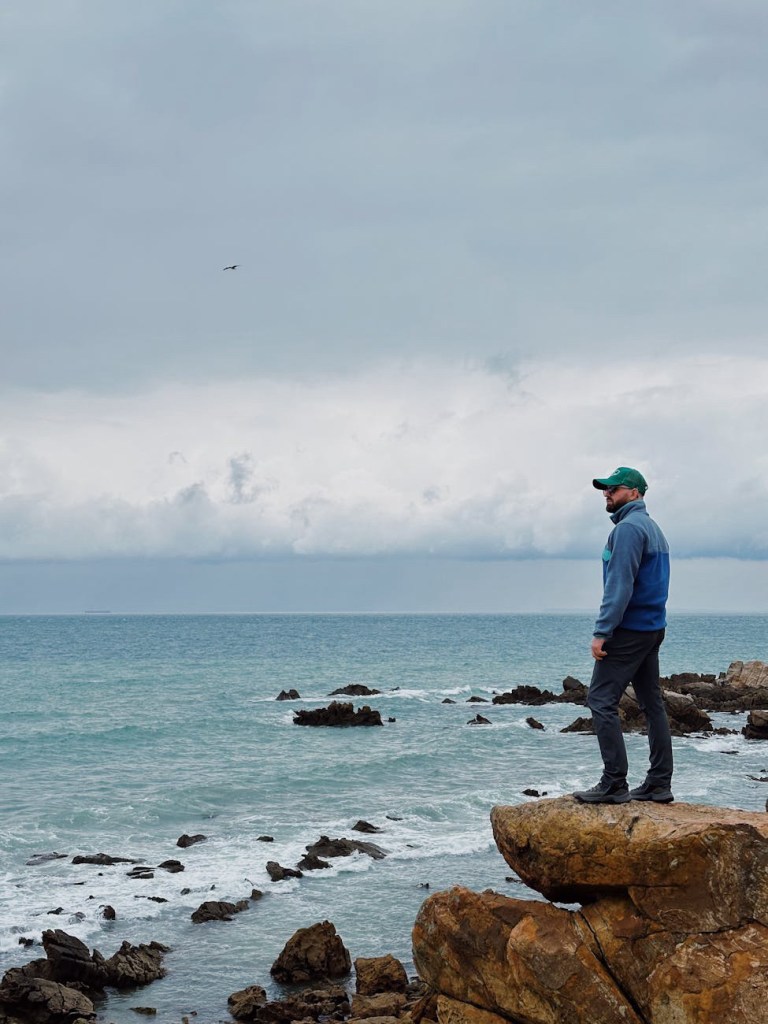
What Lies Beneath?

What’s your favorite thing about yourself?

A Driller’s Reflection on the Absence of Ancient Life Underground

As someone who has spent decades drilling across continents from Africa to the Arctic, from mountains to deserts I’ve often found myself pondering a simple yet profound question: Why have we never encountered any trace of ancient life deep underground?

Over the years, we’ve drilled thousands of meters below the surface, retrieving core samples from some of the oldest and most remote geological formations on Earth. We’ve passed through layers of volcanic rock, metamorphic belts, and deep-seated mineralized zones yet never have we pulled up a sample containing a visible remnant of life from a forgotten age.

How is this possible?

There are several scientific explanations that might help answer this question:

Life is rare in the deep subsurface While extremophile microorganisms have been detected several kilometers below ground in controlled laboratory settings, they are not visible to the naked eye. In standard exploration core drilling, such traces would go entirely unnoticed without microbiological analysis. Fossils form in different environments Most recognizable fossils are preserved in sedimentary rocks, especially those formed in shallow marine or lacustrine environments. Exploration drilling often targets mineral zones, fault systems, and deep geological structures not the sedimentary basins where ancient life typically left its mark. Geological time destroys what life creates Over millions or even billions of years, rock is transformed by heat, pressure, and tectonic forces. If life once existed in the deep zones we drill, it may have long since been erased or altered beyond recognition. We may not know what to look for If life once existed in a form unfamiliar to us perhaps based on different biochemistry or morphology we may have encountered it without realizing. It’s possible that the evidence lies hidden in plain sight, just beyond the limits of our perception or current technology.

The Absence of Evidence Is Not Evidence of Absence

This thought lingers with me: just because we haven’t found it, doesn’t mean it isn’t there. Perhaps the Earth still holds secrets too deep, too rare, or too subtle for our tools to uncover. As drillers, we are explorers by trade, and maybe just maybe some discoveries lie not in what we extract, but in the questions that arise along the way.

– Lajos Kovacsik
Who Really Runs the World – and What Comes Next?

Who Really Runs the World – and What Comes Next?

By Lajos Kovacsik

When someone asks, “Who runs the world?”, most people either shrug or launch into a conspiracy theory. But the truth is far simpler and far more unsettling: no one fully controls the world, but too many are trying to influence it without taking responsibility for the consequences.

In the Cold War era, it was relatively easy to point at two superpowers and say, “They’re in charge.” Today, power is fragmented. China is quietly but firmly building a new empire, while the United States continues to act like the world’s policeman, though with declining conviction. Europe, meanwhile, is busy debating itself while the world moves on without waiting.

Then there are the players who never appear on a ballot:

– the global tech giants,

– the investment corporations and hidden financiers,

– the defense contractors,

– and now, the AI architects,

who are already making more decisions for humanity than most people realize.

These aren’t shadowy puppet masters they’re systems that have simply slipped out of human hands.

The Current World Order – or Lack Thereof

The world is no longer unipolar, and it isn’t truly multipolar either. Instead, we’re in the midst of a chaotic, leaderless transition, where every nation, company, or interest group is trying to hold onto what it has or take what it can.

Beneath the headlines, you can sense the real shifts:

Economies pretending to grow, while cracks widen beneath the surface. Military alliances redrawing lines that should’ve never been touched. Artificial intelligence and surveillance pushing past ethical boundaries with no brakes in sight.

The world today feels like a pressurized engine with no pressure valve just people hoping it won’t explode before their watch ends.

What’s Coming Next?

I see three possible paths. None of them are comfortable, but all of them are plausible:

Collapse and Rebuild A major global crisis economic, environmental, or geopolitical forces humanity to reset. History shows that this kind of reset always comes with a cost. Technological Elitism A small elite controls the world’s resources, data, and intelligence, while the rest of the population survives on digital distractions and artificial hope. This is the path we’re already on. Collective Awakening This one’s the least likely but it’s the one worth striving for. Communities wake up. Ethics return. Technology becomes a servant, not a master. People start asking better questions and demand honest answers. But this will take time, willpower, and courage.

I don’t believe in miracles, but I do believe in experience, clarity, and reason. Every era has had those who saw the fractures coming and chose to build rather than destroy.

Today is no different. The world isn’t lost.

We just need to relearn how to see it clearly and decide what kind of future is worth fighting for.

Understanding the Core: The Foundation of Effective Exploration Drilling

Exploration drilling is more than just a preliminary step in mineral discovery it is the cornerstone of informed decision-making in mining and geotechnical investigations. Drawing from my experiences documented in Exploration Drilling, the emphasis on accurate core recovery is paramount. The quality and continuity of the core sample directly affect the geological interpretations and economic viability of any resource project.

One of the primary challenges in exploration drilling is navigating variable ground conditions while maintaining core integrity. This is where Diamond Drilling techniques shine, offering superior recovery rates in fractured and abrasive formations. The ability to retrieve undisturbed core samples allows for detailed lithological, structural, and geochemical analyses.

Drilling supervisors must prioritize bit selection, fluid management, and core handling protocols to ensure optimal results. Each hole drilled is not just a path through rock but a window into the Earth’s history every meter telling a story of formation, alteration, and potential mineralization.

Lajos

Trapped Lives – A Sociological Glimpse into Modern-Day Servitude

At the edge of the desert, far from the eyes of the world, a quiet suffering unfolds each day. It does not cry out. It does not bleed. But it weighs heavily like heat pressing against the skin, or dust settling in the lungs. It is the suffering of forgotten people, caught in a system that extracts their labor while erasing their dignity.

They come from far-flung places Yemen, Sudan, Bangladesh, Nepal driven by war, poverty, or the simple desperation of needing to feed their families. Many have fled conflict. Others have fled hopelessness. They arrive with silent expectations: to earn, to send money home, to build something better.

What they find is a life that consumes them. Twelve-hour shifts under a punishing sun. Two weeks of work for a single day of rest. Their meals never change rice and chicken, rice and chicken. Their beds are lined up in containers, their days scripted down to the minute. No holidays. No privacy. No sense of tomorrow.

They are not lazy. They are not weak. But their eyes no longer shine. Motivation that inner spark that moves people forward has been extinguished. Their present is unbearable monotony, and their future has been sold in exchange for survival. They do not dream anymore. They endure.

No one speaks of purpose. No one asks what they want to become. Their only role is to endure more than the day before. And so they do. Quietly. Mechanically. Without resistance.

The system praises efficiency. The labor force is interchangeable. If one man collapses from exhaustion, another is already waiting. A face. A name. A body willing to work. No more.

What is stolen from these men is not just time or strength it is identity. Pride. The belief that life can change.

And what remains is a brutal stillness. Not rebellion. Not protest. Just resignation a collective acceptance that this is how life will be, and how it will end.

It is easy to look away. To justify the system as necessary. To see only what is productive. But beneath the output are human beings each with stories, families, memories. Each with a right to more than this.

What we are witnessing is not merely labor. It is servitude without shackles. Slavery without chains.

And it demands to be seen. Not through pity, but through recognition. These are not shadows. These are people. And their pain should not be invisible.

Lajos

Describe a random encounter with a stranger that stuck out positively to you.

Describe a random encounter with a stranger that stuck out positively to you.

A Quiet Gesture on the Tarmac

Daily field reflections by Lajos

Last October, on a windswept airstrip in northern Saskatchewan, our charter flight to the exploration site was held up by an unexpected snow squall. I found myself pacing the empty terminal, calculating lost rig time, when an elderly Cree woman wearing a maintenance vest approached. Without a word, she handed me a paper cup of hot tea and sat beside me, letting the silence do its work.

After a few minutes she spoke softly: “Storms pass faster when you’re warm inside.” An obvious remark, perhaps, yet in that moment it redirected my thinking. We discussed the land, her late husband who had worked a core drill in the ’80s, and the community’s hopes for responsible resource projects. When the blizzard lifted, she slid a small cedar sachet into my jacket pocket “For protection; the forest always watches.” I thanked her formally, boarded the Twin Otter, and never saw her again.

On site that week, the sachet’s scent lingered in my coveralls. Whenever operational pressure rose broken rods, frozen pumps I recalled her calm, shifting my focus from metrics to people. Productivity improved not because of new equipment, but because the crew sensed a steadier lead.

That ten‑minute encounter underscored a lesson I keep relearning across continents: expertise moves steel, but quiet kindness moves teams. In an industry driven by deadlines and decimals, a stranger’s simple act can recalibrate an entire project’s atmosphere. I now carry spare thermoses of tea in my flight bag; sometimes the most efficient tool a supervisor can deploy is a warm drink and an attentive ear.

Lajos

Describe a Decision You Made in the Past That Helped You Learn or Grow

Describe a decision you made in the past that helped you learn or grow.

One of the most defining decisions in my life was the moment I committed to writing a book about my work in exploration and diamond drilling. At the time, I saw it merely as a way to document decades of experience, but it became much more than that. Publishing my book didn’t just mark the end of a project it became the beginning of a much deeper journey.

Since the day my book was released, I have found myself driven by a renewed hunger for knowledge. It pushed me to research more deeply, to question what I thought I already knew, and to continuously improve the technical and practical understanding I had built over 30 years in the field. The process of writing demanded precision, structure, and reflection, but the aftermath gave me something even greater: a genuine thirst for learning.

That decision to write and share my experience with others not only helped me grow professionally, but it also reminded me that no matter how much we think we know, there is always more to discover. In a way, I didn’t just write a book. I opened a door to the next chapter of my personal and professional development.

Lajos

What Place in the World Do I Never Want to Visit?

What place in the world do you never want to visit? Why?

To be honest, this is not a question I’ve ever seriously considered. I’ve had the privilege of working and traveling across continents from the scorching deserts of Saudi Arabia to the frozen silence of the Arctic Circle, from bustling cities in Japan to the untouched corners of Africa. And yet, even after all these journeys, I still feel that I’ve only scratched the surface of what the world has to offer.

There are still so many places I’d like to see. I don’t see the world through the lens of rejection “where would I never go” but rather through curiosity: where can I still go? Every region holds a story, every culture teaches something, and every encounter can leave a lasting impression.

Of course, I wouldn’t voluntarily walk into war zones or areas devastated by conflict or oppression not out of fear, but out of respect for the people who are suffering there. I believe traveling should be about connection, not intrusion.

Maybe that’s my answer, after all. I would never want to visit a place where humanity has been forgotten. A place without kindness, without the freedom to speak, live, or dream. But as long as there’s a spark of life, culture, and humanity, I’ll keep my passport ready.

The world still has a lot to show me and I’m not done exploring yet.

Lajos

Describe a Positive Thing a Family Member Has Done for You

Describe a positive thing a family member has done for you.

When it comes to this topic, I know I’m one of the lucky ones. I have a truly supportive and loving family, and for that, I’m deeply grateful.

It’s hard to choose just one moment, because their kindness shows in so many ways big and small. But if I had to pick, I would say the most meaningful thing they’ve done for me is simply being there. Whether I was chasing work across continents or facing the stress and pressure of daily responsibilities, they never made me feel alone. A call at the right time, a word of encouragement, or just a quiet understanding these moments made all the difference.

There’s a certain strength that comes from knowing your family believes in you, even when you’re not sure yourself. That strength has carried me through more than I can count.

So yes, I’m lucky. Not because of one grand gesture, but because of the quiet, consistent love of the people closest to me.

Lajos

What is Your Favorite Restaurant?

What is your favorite restaurant?

When asked about my favorite restaurant, I often find it easier to list the ones that are not on my favorites list. I genuinely enjoy good food and love exploring different cuisines and dining experiences.

Over the years, I have had the pleasure of trying countless restaurants, from cozy family-owned places to sophisticated fine dining establishments. Each meal is an opportunity to discover new flavors, traditions, and culinary creativity.

Rather than committing to just one favorite, I appreciate a wide variety sometimes I crave a perfectly cooked steak, other times a hearty traditional stew, or a delicate sushi roll. It all depends on the day, the mood, and the company.

For me, the real favorite is the experience itself: sitting down to a thoughtfully prepared meal, savoring each bite, and enjoying the moment. Good food has a unique ability to connect people, cultures, and memories, and that is something I will always value.

Lajos

Where Do I See Myself in 10 Years?

Where do you see yourself in 10 years?

At 55 years old, it is not easy to give a precise answer to where I see myself in 10 years. Life has taught me that even the best-laid plans can change in unexpected ways. However, one thing remains certain: I trust in the best possibilities ahead.

I hope that the next decade will bring continued health, personal growth, and peace of mind. I would like to be surrounded by family, good friends, and the satisfaction of knowing that I have given my best both professionally and personally.

Perhaps I will spend more time mentoring, sharing the knowledge and experience I have gathered over the years, and finding joy in the simple things life offers.

The future may be uncertain, but my attitude remains optimistic. Wherever life leads, I am ready to face it with gratitude, resilience, and hope.

Lajos